Tuesday, April 5, 2011

Pun Intended

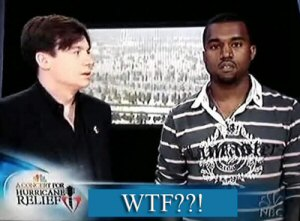
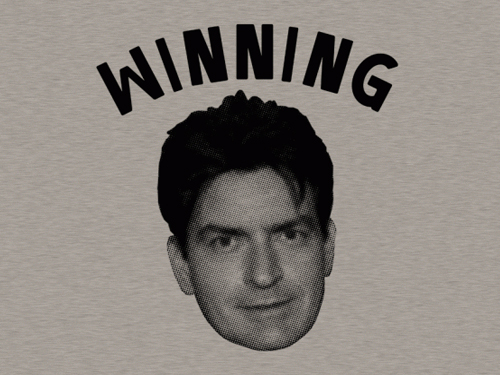
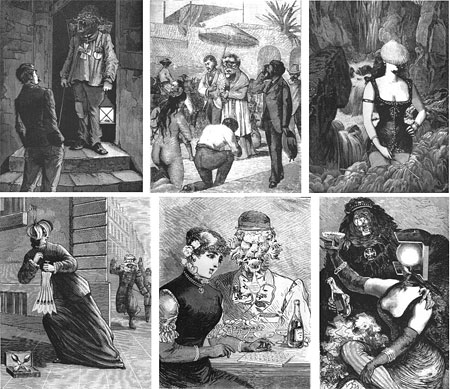
For our first assignment we were to make a visual pun and present it to the class. I ultimately ended up with "toolbox" which consisted of a box with printed out pictures of celebrities I consider "tools" in the urban dictionary definition kind of way :
1. A person, typically male, who says or does things that cause you to give them a 'what-are-you-even-doing-here' look. The 'what-are-you-even-doing-here' look is classified by a glare in the tool's direction and is usually accompanied by muttering of how big of a tool they are...The tool is alwasys making comments that are out-of-place, out-of-line or just plain stupid. The tool is always trying too hard to fit in, and because of this, never will...
2. someone who tries too hard. a poser.
3. a fake person. someone does things to impress people...
4. A person of utter uselessness.

So I thought...not very hard and ended up using these gems as the tools for my toolbox:


I was wanting to do "Causualties" or "casual-ties" but realized my tie making skills aren't quite up to par. But I'm happy with what I ultimately chose.

Art Review: Bridging Through the Arts

This week I went to the MCC gallery Bridging Through the Arts: Transracial Community Building and even though they had yet to put the information cards up for each piece I enjoyed it all the same, I almost prefer that I don't know what every piece is about. My favorites of the exhibition include:

Evan Bissell: What Cannot Be taken Away: Families and Prison Projects - Evan Bissel's work instantly grasped my attention not because of the beautiful paintings but of the hand drawn images that accompanied the prints that pointed out features that symbolized different things ti each of the subjects, all former prisoner's attempting to get their lives back together. The small figure in the distance of the first piece is the man's daughter who he considers his rock but also knows the great distance between them because of his actions. The writing in the 4th image is the subject's own which talks about how easy it is for him to forgive others but how near impossible it is to forgive himself for what he has done.


Linda Vallego: Censored - Through my own research I found that this piece is part of a series called Censored. The Newspaper documents the "Inaguration of the Pope" as whited-out on the top of the page and shows the tremendous crowd at the Vatican with who I can assume are muslim women looking on. White-out is used to censor the eyes and mouths of the Pope and the Cardinals (?) that surround him, the front opening of the Vatican, and the rings and finger-tips of clapping hands. Super-imposed on the newspaper are what appear to be film strips that present striking color to the image. My favorite piece in the gallery, I loved Vallejo's use of multi-media to make her critisim of the Catholic church very apparent.
Estandarte IV, 2006

Shizue Seigel - Seignel's etching "Blood on Your Face" was very eye catching to me in a room otherwise so filled with color. I love the mix of the gothic and the surreal in the etching and the dark subject matter which includes a grim reaper-like figure, an ingured moon and writhing humans along with the thick seperation from the top and bottom with a thick white line makes me think this must be hell and an earth that is almost the same. So erie. It also reminds me quite a lot of Max Ernst's (aka my new found love) work.
Blood on Your Face

play with fire


Many do not know but the couch burning as demonstrated in Isla Vista on the Friday evening of February 18th 2011 is a tradition that has very legitimate beginnings. It is actually based on a ritual known as the Bunafa, a ceremony of the Trualse tribe of the Cook Islands. The tri-annual ritual is used as a way to fend off the evil properties of laziness, war and procrastination and summon the god of rebirth. The South Pacific island community uses the ceremony as a way to avoid laziness in the tribe by burning each household's hand made bamboo and palm-leaf sofa benches (which are highly flammable) as a way to encourage productiveness with the following days ritual of assembling a new bamboo sofa bench.
The Bunafa ritual begins with the participants alternating between drinking and dousing each sofa with a liquor of the tribe (Tevokey). A tribal dance known as the Visnce includes jumping over the fire (as demonstrated by one young man in the video) as a way to prove oneself ready to start making couches of their own.
The couch-burning tradition in IV started after the Bank of America branch of Isla Vista was burned down in February of 1970 as part of the Isla Vista Riots in protest of the Vietnam War.

The February couch burning is a tradition started by Santis Mora, Polynesian and a Trualse tribe decentent in 1974 on the anniversary of the fire and in celebration of America's impending exit from Vietnam. The burning is a tradition in which students commemorate the loses of the Vietnam War while praying for successful midterms(which happen around that time). This tradition, which is coming on its forth decade of existence in Isla Vista is often hushed by authorities when in reality the ritual is simply a religious ceremony of the Trualse peoples as well as a war remembrance tradition for the students at UCSB.

Monday, April 4, 2011

meltingIDENTITYpot

I really enjoyed Kip's lecture today on Identity and what makes it up one's identity. When Kip was asking people "What are you?" I couldn't help but think, "I am what you perceive me to be and I help(i say help because you can't always control how you come across to someone) determine what version of myself you perceive" I have made many of the choices that have caused me to become the person I am today but so many other factors(or classifications as Kip put it) play a part in who I am. For example I often can come across as distance when people first meet me because I have a pre-conceived idea in me that people will not remember me which a attribute to going to 6 schools between k-12...anyways back to the lecture. I thought Kips examples and subject actually tied into last weeks reading quite nice with the way we become part of our surroundings in our minds and how ones identity is so simplified visually in ones own head but so complex otherwise.
Some of my favorite artist's featured today included:
Adrian Piper - though we didn't see much of her art I thought her "Calling Cards" were absolutely genius. I mean come on who wouldn't love to have the chance to straight up tell people what they have to say before any misunderstanding happens.
Cindy Sherman - I have loved Sherman for quite some time and I never get bored of seeing her work in various classes(though i'll admit I have grown a little weary of this particular image, i'd say her most famous, though I've seen this (one of my personal favorites)and this one quite a lot as well) Her work is something I think I would love doing, acting with everyone only able to see the final piece.
Untitled #175, 1987

Albert Chong - I also really like Albert Chongs mixed-media pieces. I love love love mixed media in general but the symbolism of his pieces just made everything so much more interesting.
Ok this picture is awesome but totally tripped me out at first because I thought the pollen were cut marks and I was thinking
there were some major family issues or something. Flowers. Much sweeter.

Sunday, April 3, 2011

the storms a-comin' (its just not quite here yet)

confession
  • this topic/theme sounds both terrifying and exciting to me, I'm excited to know the assignment(s) for this one, i've always been interested in learning american sign language so the idea of doing confessions with sign language sounds cool...
sequence/narratives
  • i theoretically would love to do something narrative-wise with the incoorperation of dance but that would actually mean me dancing in front of people which i'm thinking at this point in time is a little ways off.
  • at the beginning of the year i started(and failed to keep doing after about 3 weeks) a series of daily journalling through image, something along those lines would be cool
  • now that i know what comics are really defined as I was thinking doing something in the "comic" definition
alternate persona's
  • this topic definitely has my attention, when i here those two words i think of everything from manic depressant people to actors to how i act in santa barbara versus in my hometown.
personal space
  • i think i am perhaps most warey of this idea just because to me it sounds like public things will need to be done to do whatever assignment(s) goes along with this. when i hear personal space the first two things that pop into my head are the movie Bubble Boy and Yoko Ono's sweater cutting performance art piece.

understanding Juxtaposed pictorial and other images in deliberate sequence chs.1-2

I'll admit it, I had the negative stigma when it came to comics, I did...not anymore. I did my reading while typing reaction notes on my computer so rather than simply summarize I'll talk about some of the things I found most interesting about the opening 2 chapters.
Although it took an entire chapter McCloud did a great job of defining comics in an inch by inch kind of way to finally be: "Juxtaposed pictorial and other images in deliberate sequence, intended to convey information and/or to produce an aesthetic response in the viewer." a definition that is "neutral in terms of style subject matter and quality". I loved that McCloud presented his information in a way that forced to you ask a question he would answer on the following page.
Through his history lesson we determined that hieroglyphics are the ancestors of the written word not comics and that scribes are to be read zigzagged from the bottom up (news to me!) as well as the fact that Family Circus and Dennis the Menace are, sadly, not comics. His mention of William Hogarth excited me because yes of course Hogarth did comics, amazing huge-scale ones but comics all the same.
"Many of the best comics of the 20th century have not been defined as so because of their superior quality “illustrators” “cartoonist’s” “commercial artist’s”' something that I think could've been hindered if whoever named the type of art didn't come up with the word "Comic" I mean come on if you don't want people to think you're art is a joke of course you wouldn't say you make comics.
The second chapter on the vocabulary of comics was very interesting starting with the defining of the "icon"(“Any image used to represent a person, place image or idea”) and showing how the level of the abstraction of these icons helps determine the significance in cartooning (amplification of meaning through simplification). Everything McCloud talked about made so much sense to me, the more cartoony a face is the more relatable the image is, one's own face is a mask that we ourselves only ever picture in about as much detail as a simple cartoon; childhood obsession with cartoons comes from the search for universal identification and that we as humans "have the ability to extend our identities" which is essentially how we’ve been able to progress so much.
McCloud's theory regarding how he represents himself in the book in which he states "If who I am matters less maybe what I say will matter more", is something I am completely buying.
All the things we experience in our lives can be separated into 2 realms: the realm of the concept and the realm of the senses. He talks about how pictures are received and writing is perceived and that comics require the perfect hybridity between the two.
PS I have officially become obsessed with Max Ernest

Friday, April 1, 2011

Introducing Understanding Comics

Introduction CHAPTER? Not so sure. Introduction, definitely. The introduction page serves as a good abstract of what we can expect from this book? comic? not a graphic novel...because those are fiction, graphic textbook...not quite...graphic text. We'll stick with that. What I like about this introduction is that McCloud blatantly says that the book is hard to describe but does his best to do so in the most conversational of terms. I already know I will learn things from this book, I'm not very well versed in the comic genre though I did read Jughead comics when I was little as well as the newspaper comic section until college (when I stopped getting the paper altogether). I really like that the intro starts off with a general overview with defining comics and examining it as an art form then the conversation starts picking up pace as he talks about time in comics and the relationship between words and images and what changes between panel and he eventually gets super excited as he mentions the theories he will talk about and builds and build and builds until finally…”oh.” It’s as if McCloud knows that I was like ok, cool…ok, cool…ok, cool…ok, uh loosing me... I hope I am as increasingly pleased while reading this book as McCloud is taking to his old tie and stripe pants clad friend, Matt.